

Lorraine Campbell Books In Order
-
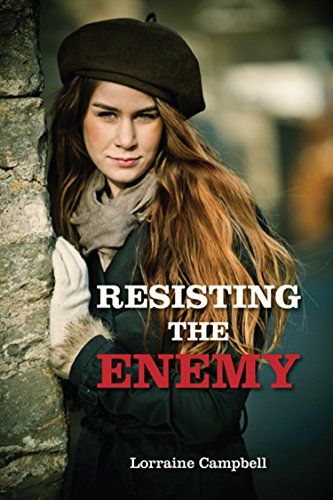
Resisting the Enemy
[ October, 2014 ] -
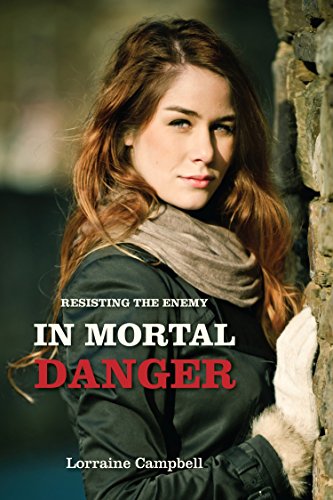
In Mortal Danger
[ April, 2015 ] -
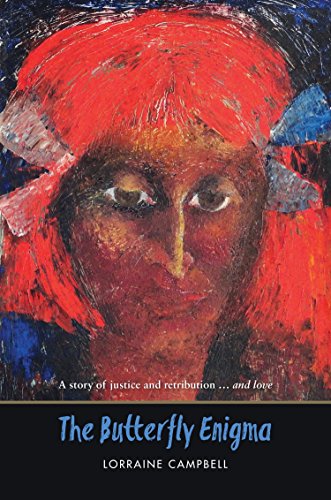
The Butterfly Enigma
[ November, 2015 ]


About Lorraine Campbell
Genres
Lorraine Campbell Bio
It was only when Lorraine Campbell went back to university and finished an Arts degree at Monash that she discovered her love of writing. That academic grounding in philosophy and literature gave her something many thriller writers lack: a genuine engagement with moral complexity, with the question of whether justice and vengeance are really the same thing. The gap between those two ideas runs through all three of her novels, surfacing most openly in The Butterfly Enigma and colouring even the wartime romance of the Resisting the Enemy series.
Campbell is a licensed shorthand writer who spent seventeen years as a court reporter with the Victorian Government Reporting Service, where she provided verbatim transcripts of Supreme Court criminal trials and proceedings in other jurisdictions, and she has also worked as a freelance court reporter in the Australian Industrial Relations Commission. That career gave her an extraordinary window into how legal proceedings work, the texture of courtroom life, and the stories that surface when people are placed under the scrutiny of the law. It also handed her the spark for her most ambitious book. “Working as a court reporter over the years, I heard some incredible stories in the Melbourne Law Courts but the tales of Nazi war criminals living in Australia and the many unsuccessful attempts to bring them to justice filled me with an ongoing and abiding sense of outrage,” she has explained, and that outrage became the engine of The Butterfly Enigma.
Campbell’s first two novels form the Resisting the Enemy series, both published by Palmer Higgs. Resisting the Enemy follows Valentine de Vaillant, known as Valli, from a twelve-year-old schoolgirl in Australia to a young woman living in German-occupied France. From the moment Valli joins a Resistance group, she takes on a series of clandestine activities that at any moment could lead to arrest by the Gestapo.
Once a German officer is billeted in her own home things become tricky, particularly since Valli finds him somewhat charming despite her hatred for everything he stands for. As the German Wehrmacht ratchets up its persecution of Jews the stakes turn deadly, and Valli learns of a traitor within the resistance, then races desperately to warn her friends before it is too late. The Portland Book Review called it “impossible to put down… equal parts spy thriller and romance” and awarded it five stars.
The sequel, In Mortal Danger, has readers once again following the dangerous escapades of young Valentine de Vaillant in German-occupied France during World War II. Campbell offers a fascinating glimpse into France during the Occupation, touching on realities like food rationing and the black market, while Valli stays fiery and independent as she dives headfirst into Resistance missions and copes with the grinding pressures of wartime life.
Her third novel, The Butterfly Enigma, published by Port Campbell Press on 8 December 2015, is the one that most completely maps onto Campbell’s own life. The story begins in Latvia in 1941, but most of it takes place in the mid-1960s, where Lena Marceau holds a reporting position in the Melbourne Law Courts. Originally adopted by a Parisian family, she is getting used to single life after a failed marriage to an Australian, and she is haunted by dim memories of a childhood she cannot fully access. During a court sitting she is shocked to recognise the chilling voice of a prominent judge, and she becomes determined to find out who he really is and the role he played in her past.
The novel ranges from the submarine-patrolled sea lanes of the Baltic to the courtrooms of mid-sixties Australia, to the island of Crete, to Paris, Tel Aviv, and Rio de Janeiro, drawing on Campbell’s evident familiarity with the geography and the period detail of each place.
Reviewers described The Butterfly Enigma as “a multi-faceted story of feminism, war crimes, retribution, courage and strength, and complex relationships,” and “a gripping tale of society, justice, love, and the moral ethics involved in all of the above.” The Portland Book Review awarded it four and a half stars and praised it as a story that raises “the moral issue of the ambiguity between justice and vengeance” that stays with the reader long after the final page. The book was also picked as one of the “top picks” in the Sunday Daily Telegraph, and it featured in Country Style magazine’s book club, listed as a great read for the Easter holidays, with the reviewer noting “excellent research and drama.”
The Butterfly Enigma is a standalone novel, though it takes place in the same world as the Resisting the Enemy series, with several characters making cameo appearances. That link rewards readers who come to it having followed Valli’s story, and it stays entirely accessible to anyone arriving new to Campbell’s fiction.
Her articles have appeared in On Line Opinion, News.com.au, and Girl.com.au. Away from the desk, Campbell lives in Melbourne’s bayside, adores the opera, is an avid moviegoer, and keeps fit by running every morning along the beach or through the local parks. She has a long-standing passion for classic English sports cars, and among others she has owned a red Triumph Herald, a white Triumph TR4A, and for the last twenty years a mimosa yellow Triumph TR6, one of the last series ever made. The TR6 was produced from 1969 to 1976, which makes hers a late-run example of a model now regarded as a collector’s piece.
Campbell’s literary influences are telling: she lists Charlotte Brontë, Stefan Zweig, Jane Austen, Robert Harris, and Alan Furst among her key inspirations. That combination runs from Austen’s rigorous observation of character through Zweig’s European moral seriousness, as seen in works such as Beware of Pity and The World of Yesterday, to Furst’s atmospheric wartime espionage fiction in novels like The Foreign Correspondent and The Spies of Warsaw, and it says a great deal about what she is attempting on the page. Her books sit in the tradition of historical fiction that takes ideas seriously and trusts readers to sit with uncomfortable questions.
Has Lorraine Campbell’s work received any media coverage?
The Butterfly Enigma was picked as one of the “top picks” in the Sunday Daily Telegraph. It also featured in Country Style magazine’s book club as a great read for the Easter holidays, with a reviewer praising the “excellent research and drama.” The Resisting the Enemy series drew coverage from the Portland Book Review, the San Francisco Book Review, and the Historical Novel Society, among other outlets. No major Australian literary awards have been identified for Campbell’s work in public sources available at the time of writing.
Lorraine Campbell FAQs
Who is Lorraine Campbell?
She holds an Arts degree from Monash University, majoring in Philosophy and English Literature, and she’s studied French and German for a number of years. She’s published three novels to date: Resisting the Enemy, In Mortal Danger, and The Butterfly Enigma.
What books has Lorraine Campbell written?
Resisting the Enemy and its sequel In Mortal Danger were both published by Palmer Higgs and are classified as historical fiction and young adult fiction.
Her third novel,
The Butterfly Enigma, came out on 8 December 2015. The first two books form a connected series that follows Valli de Vaillant through German-occupied France; The Butterfly Enigma is a standalone historical thriller set partly in the Melbourne Law Courts and partly across several countries in Europe, the Middle East, and South America.
What is The Butterfly Enigma about?
The most powerful part of the novel lies in the tough question it poses about what is morally justifiable, which continues to loom long after you finish the book.
Campbell drew on stories she had heard during her years as a court reporter about Nazi war criminals living in Australia and the many unsuccessful attempts to bring them to justice, and she asked why these men could never be put on trial for their crimes, then decided to bring that part of Australia’s history to life.
What is the Resisting the Enemy series about?
The sequel, In Mortal Danger, continues with the dangerous escapades of Valli in German-occupied France during World War II.
Von Stahlmann, the German officer billeted in Valli’s home, is a complex and surprisingly likeable character, and his courage and integrity will have readers willing Valli to admit her feelings. It’s fascinating and wonderfully well-written.
What genre does Lorraine Campbell write?
What was Lorraine Campbell’s career before she became an author?
She holds an Arts degree from Monash University, majoring in Philosophy and English Literature, and she’s studied French and German for a number of years. That combination of legal precision and literary training shows throughout her fiction, which handles complex historical settings and morally ambiguous characters with evident care for both the facts and the inner lives of the people on the page.