

Paul Kelly Books In Order
-
-
-
Paradise Divided: The Changes, the Challenges, the Choices for Australia
[ January, 2000 ] -
100 Years: The Australian Story
[ October, 2001 ] -
-
-
-

-
-
-

-


About Paul Kelly
Genres
Paul Kelly Bio
Kelly was born in Sydney and spent much of his early life on army bases where his father was an officer, an upbringing he credits with shaping a lifelong interest in military history. He was educated at St Pius, Chatswood, and completed his BA with a history major at the University of Sydney in 1968.
After graduating, he worked in the Prime Minister’s Department in Canberra from 1969 to 1971, advising on parliamentary and Executive Council matters, before moving into journalism and eventually serving as chief political correspondent and Canberra bureau chief for both The Sydney Morning Herald and The Australian.
Kelly joined The Australian as a political correspondent in 1971 and was assigned to the Canberra press gallery in March that year, a move that came after his period as a junior public servant in the Prime Minister’s Department. After a spell with Fairfax, he returned to The Australian and established himself as Australia’s foremost analyst of foreign and domestic policy. The path from Canberra bureaucrat to press gallery reporter to editor-in-chief is one of the more unusual careers in Australian journalism, and it shows in his work: Kelly writes about the machinery of government from the inside out, with a command of policy detail that most commentators simply can’t match.
His roles included Chief Political Correspondent with The Australian from 1974 to 1975, Deputy Editor of The National Times from 1978 to 1979, Chief Political Correspondent for The Sydney Morning Herald from 1981 to 1984, and National Affairs Editor of The Australian from 1985 to 1991, before he became Editor-in-Chief from 1991 to 1996. His move to Sydney as editor-in-chief in 1991 was dramatically timed. On Kelly’s first night in the chair, he wrote what became a historic front page headline: “Fall of Communism.”
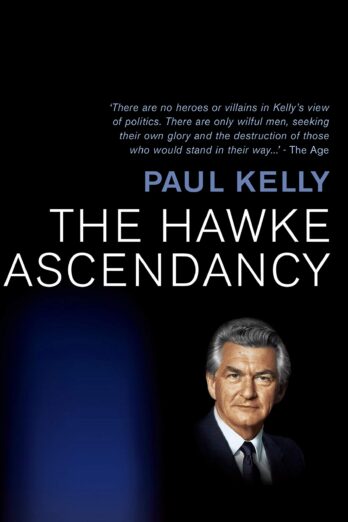
His first book arrived while he was still a fairly young reporter. He published The Unmaking of Gough within a year of the Whitlam dismissal, at age twenty-eight, and reissued it as The Dismissal in 1982. The book set the pattern that would define his career: deep access, meticulous sourcing, and a willingness to sit with the complexity of events rather than flatten them into a verdict. Later books include The Hawke Ascendancy (1984), The End of Certainty (1992), November 1975 (1995), and the article collection Paradise Divided (2000).
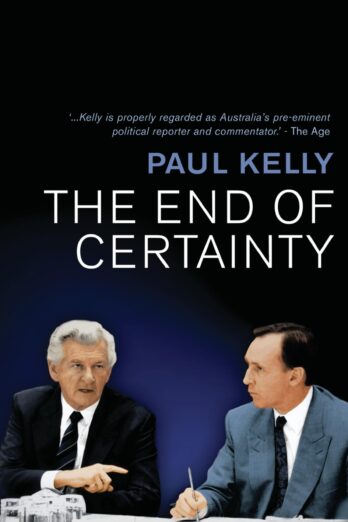
The End of Certainty, published by Allen and Unwin in 1992, became the book most closely associated with his name. It’s the inside story of how Australia was governed by Bob Hawke and Paul Keating during the 1980s, a decade dominated by Hawke’s election victories, Keating’s economic overhaul, and the spectacular breakdown of the partnership between those two men. The Times Literary Supplement called it “the most comprehensive account of Australian polity since that of Sir Keith Hancock half a century ago.” That kind of verdict from a serious British literary journal signals something beyond political journalism: Kelly was now read as a historian, and the label stuck.
Kelly also presented the 2001 five-part television documentary for the ABC on Australian history and character, 100 Years: The Australian Story, and wrote a companion book of the same title.
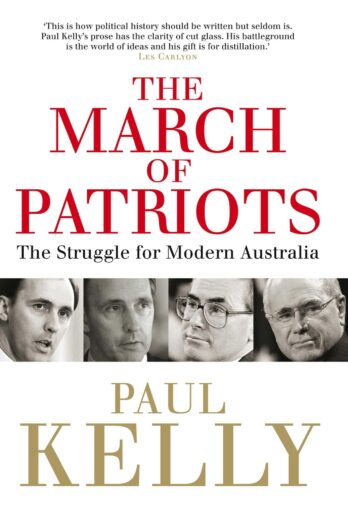
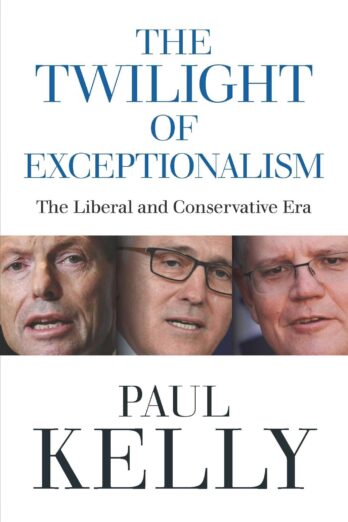
In the second half of his career, Kelly produced what’s become a trilogy on modern Australian politics, each volume published by Melbourne University Press. The March of Patriots: The Struggle for Modern Australia appeared in 2009, drew on more than 100 interviews with key players, politicians, advisers and public servants, and looked at how Paul Keating and John Howard between them reshaped Australian politics across the late twentieth century. Triumph and Demise: The Broken Promise of a Labor Generation followed in 2014, drew on more than sixty on-the-record interviews, and chronicled the rise and fall of the Labor governments of Kevin Rudd and Julia Gillard. The Walkley Book Award judges called it “an outstanding work of journalism as history from one of our finest writers and thinkers.” The Twilight of Exceptionalism, published by Melbourne University Press in 2026, completes the trilogy.
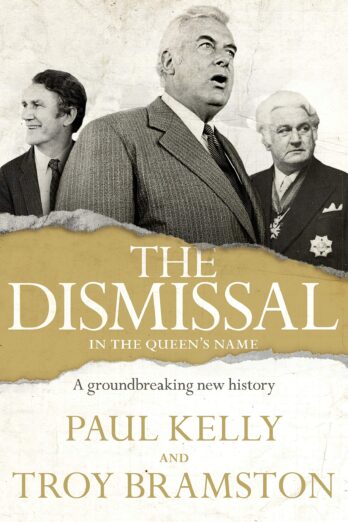
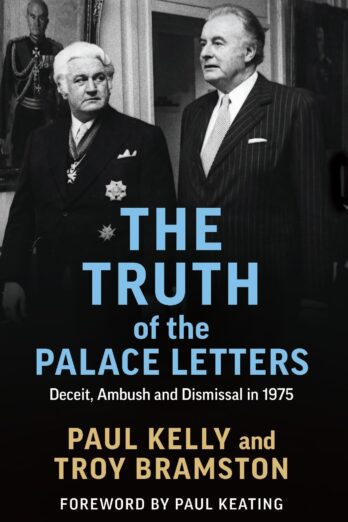
Kelly has also returned repeatedly to the events of November 1975. With Troy Bramston, he produced The Dismissal: In the Queen’s Name (2015) and The Truth of the Palace Letters (2020), the latter drawing on the correspondence between Governor-General Sir John Kerr and Buckingham Palace that the High Court ordered released in 2020 after decades of suppression. The Palace Letters book sparked considerable public debate and showed something fairly consistent about Kelly’s method: he returns to a subject when new evidence demands it, treating the historical record as a living document rather than a closed file.
Kelly has been a fellow at the Kennedy School of Government at Harvard University, a visiting fellow at King’s College London, and a fellow at the Lowy Institute in Sydney. He holds a Doctor of Letters from the University of Melbourne and is a Fellow of the Academy of Social Sciences in Australia, distinctions awarded to scholars whose work has made a sustained contribution to their field.
His awards are a fair record of how the Australian journalism community rates his work. He won the Graham Perkin Australian Journalist of the Year Award in 1990, one of Australian journalism’s most prestigious individual honours, and took out Walkley Awards for both Journalism Leadership and Commentary, Analysis, Opinion and Critique in 2001. The Walkley Book Award, presented each year for excellence in long-form journalism and nonfiction, went to Kelly in 2014 for Triumph and Demise. He’s also received the Dunlop Asialink Medal (2005) for his contribution to Australia, Asia engagement, and he was inducted into the Australian Media Hall of Fame.
Fellow Australian journalists have described Kelly’s work as “distinguished for his broad and deep grasp of the inter-relationship of economics and political shifts, and his ability to place Australian domestic developments into an international and historical context.” That description captures what separates a Paul Kelly book from ordinary political journalism: the frame is always wider than the episode, and the episode is always more specific than that frame would suggest.
Kelly has written widely on international affairs across America, Europe and Asia, and has interviewed figures including Margaret Thatcher, Lee Kuan Yew, Madeleine Albright, Tony Blair and Jiang Zemin. He appears each week on Australian Agenda on Sky News and was for nearly a decade a regular on Insiders on ABC TV.
Paul Kelly FAQs
Who is Paul Kelly the author?
He is editor-at-large and a former editor-in-chief of The Australian, and he’s covered every prime minister from Gough Whitlam to Anthony Albanese.
He’s written or co-authored twelve books on Australian politics and history, and he’s widely regarded as the senior political analyst of his generation in Australian print journalism.
What books has Paul Kelly written?
Co-authored with Troy Bramston, The Dismissal: In the Queen’s Name appeared in 2015 and The Truth of the Palace Letters in 2020. The Twilight of Exceptionalism was published by Melbourne University Press in 2026, completing his trilogy on modern Australian politics.
What is The End of Certainty about?
Allen and Unwin first published it in 1992, and it remains one of the most cited works of Australian political history, described by The Times Literary Supplement as “the most comprehensive account of Australian polity since that of Sir Keith Hancock half a century ago.”
What is Triumph and Demise about, and did it win any awards?
The judges called it “an outstanding work of journalism as history from one of our finest writers and thinkers,” and praised Kelly’s “rare skill in capturing intimate testimony from key players, while managing to stand back from the tumult to offer calm observation and reflections on politics and the nation.”
What genre does Paul Kelly write in?
He writes on Australian politics, policy, history and international relations, and he covers governments from Whitlam to the present. He holds a Doctor of Letters from the University of Melbourne and is a Fellow of the Academy of Social Sciences in Australia, distinctions that signal how far his work has travelled beyond the press gallery.
What awards and fellowships has Paul Kelly received?
He has been a fellow at the Kennedy School of Government at Harvard University, a visiting fellow at King’s College London, and a fellow at the Lowy Institute in Sydney, and he holds a Doctor of Letters from the University of Melbourne. He’s a Fellow of the Academy of Social Sciences in Australia and was inducted into the Australian Media Hall of Fame.
What is Paul Kelly’s background before journalism?
He joined The Australian as a 23-year-old journalist in 1971 and was assigned to the press gallery in March that year. That early stint inside the machinery of federal government gave his political reporting a grounding in how government actually works, and it proved durable across fifty years of journalism.