

Michael Veitch Books In Order
-
-
-
-
-
-
-
-
-
-
-
-
Borneo: The Last Campaign
[ August, 2025 ]


About Michael Veitch
Michael Veitch Bio
The arc of Michael Veitch’s career is not one you could have predicted from the outside. A young man who spent his university years performing in comedy revues, then spent a decade as one of Australia’s most recognisable sketch comedians, eventually became one of the country’s most respected writers of military history. That shift was not a reinvention, it was, by all accounts, the emergence of something that had always been there.
Veitch attended Melbourne Grammar School and the University of Melbourne, where he completed an arts degree and took part in the Melbourne University Revues.
Those revues were the launching pad.
After one performance, producers from the ABC commissioned The D-Generation in 1985, a half-hour weekly sketch comedy series.
Veitch performed across both seasons of the show, then went on to write and perform in the sketch comedy programmes Fast Forward and Full Frontal on the Seven Network between 1989 and 1995.
After television comedy wound down, Veitch moved into print journalism and broadcasting.
He began freelancing as a columnist and arts reviewer for newspapers and magazines.
Between 2005 and 2010, he presented the national TV arts programme on ABC Television, Sunday Arts.
It was a long stint at the intersection of culture and communication, and it sharpened an instinct for storytelling that would prove essential to everything that followed.
The pivot to military history came from an unexpected lunch.
He had lunch with his friend, journalist Peter Wilmoth, who was working on a biography of the late actor and Spitfire pilot Bud Tingle. Veitch found himself translating the military lingo for Wilmoth, sparking an idea. Wilmoth encouraged Veitch to write a book about the subject, amazed by his encyclopaedic knowledge of the war.
Veitch credits his writing style to his father, a journalist who wrote a lot of human-interest stories.
That instinct, to get at the human being inside the uniform, the fear and the dark humour behind the mission report, defines every military history book he has since produced.
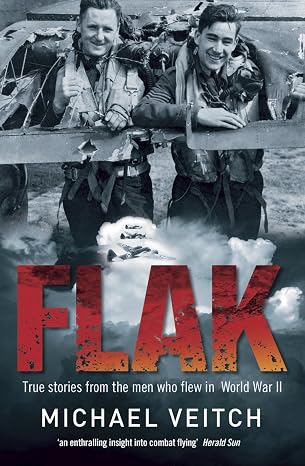
His literary debut came with Flak: True Stories from the Men Who Flew in World War II in 2006, published by Pan Macmillan, which drew on interviews with RAAF and RAF veterans to recount their aerial combat experiences.
Over the course of a year, Veitch interviewed more than fifty former aircrew across Australia, many of whom had never spoken about their experiences before, even to their families.
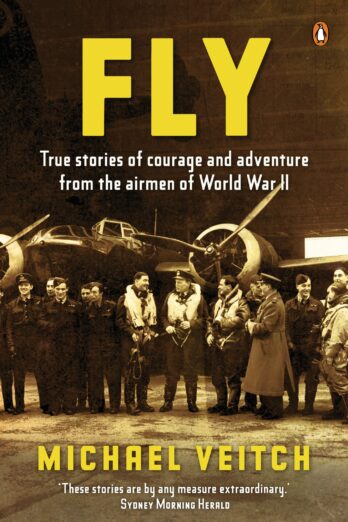
This was followed by Fly: True Stories of Courage and Adventure from the Airmen of World War II in 2008, expanding the format with additional veteran accounts and establishing a pattern of blending personal narratives with meticulous research.
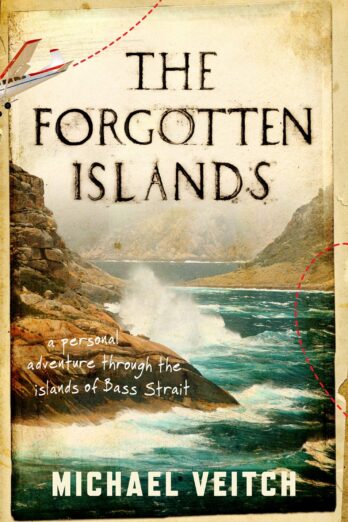
A third book, The Forgotten Islands, exploring the lesser-known islands of Bass Strait, was published by Penguin Australia in August 2011.
It was an indication that Veitch’s curiosity was never going to stay narrowly focused on aircraft. History of place, history of people, history of the sea, all of it interested him.
The books that followed cemented his reputation as a writer of serious popular history.
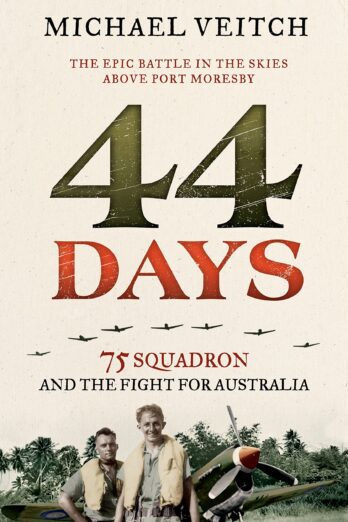
44 Days: 75 Squadron and the Fight for Australia (Hachette, 2016) tells the story of RAAF 75 Squadron, which bravely defended Port Moresby for 44 days in March and April 1942, when Australia truly stood alone against the Japanese. This group of raw young recruits scrambled ceaselessly in their Kittyhawk fighters in an extraordinary and heroic battle, the story of which had been left largely untold.
The Daily Telegraph called it “brilliantly researched and sympathetically told,” while the Adelaide Advertiser wrote that it “should be part of Australian military folklore.”
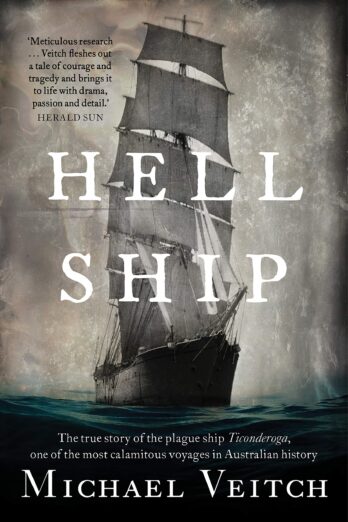
Hell Ship tells the story of the Ticonderoga, a clipper ship that sailed from Liverpool in August 1852, crammed with poor but hopeful emigrants, mostly Scottish victims of the Clearances and the potato famine, who believed a better life awaited them in Australia. Three months later, a ghost ship crept into Port Phillip Bay flying the dreaded yellow flag of contagion. On her horrific three-month voyage, deadly typhus had erupted, killing a quarter of the Ticonderoga’s passengers and leaving many more desperately ill.
Michael Veitch is their great-great-grandson, and Hell Ship is his brilliantly researched narrative of one of the biggest stories of its day, now all but forgotten. Broader than his own family’s story, it brings to life the hardships and horrors endured by those who came by sea to seek a new life in Australia.
The Age described it as “imaginative and vivid… a window onto the times, both in Britain and Australia.”
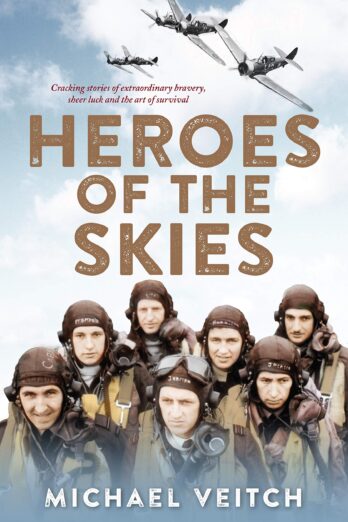
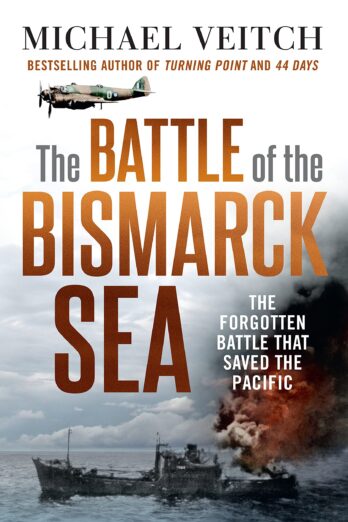
His books include the critically acclaimed accounts of Australian airmen in World War II: 44 Days, Heroes of the Skies, Fly, Flak, Barney Greatrex, Turning Point and The Battle of the Bismarck Sea.
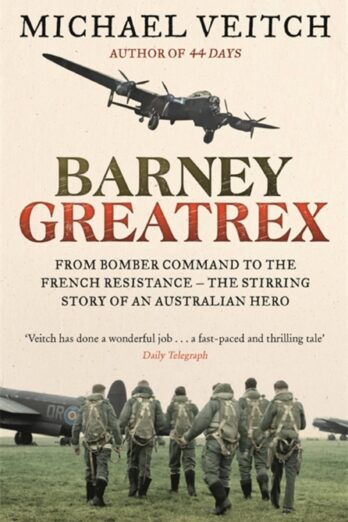
The Barney Greatrex book tells the incredible untold World War II story of Australian hero Barney Greatrex, from Bomber Command to French Resistance fighter. A school and university cadet in Sydney, Barney Greatrex signed up for RAF Bomber Command in 1941, eager to get straight into the very centre of the Allied counterattack.
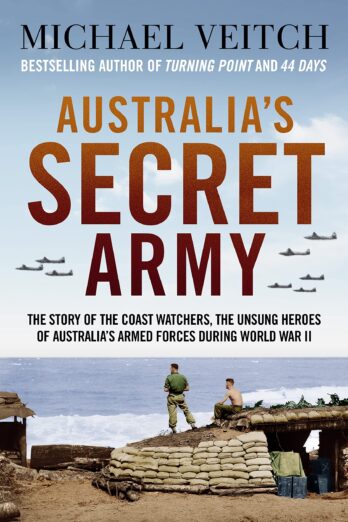
Australia’s Secret Army (Hachette, 2022) covers the Coast Watchers, established after World War I by the Royal Australian Navy, a loose organisation of several hundred European settlers, missionaries, patrol officers and planters living in British and Australian Pacific Island territories, whose job was to observe and report on the enemy. They were mostly unpaid volunteers who were never expected to do any fighting, nor to operate inside enemy-occupied territory. But when World War II came to the Pacific, that is exactly what they ended up doing, becoming, in effect, Australia’s secret army.
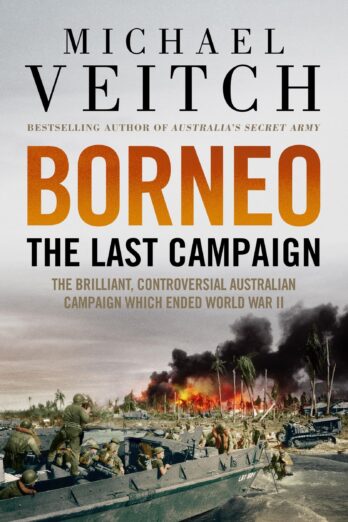
His most recent title, Borneo: The Last Campaign (Hachette), tells the story of the brilliant yet controversial Borneo campaign which ended Australia’s involvement in World War II, covering Operation OBOE, the massive, three-pronged assault on the vast Japanese-held island of Borneo in 1945. It was one of the largest amphibious invasions of the entire war, and a virtually all-Australian operation.
Veitch’s writing across all these books follows a consistent method. He goes looking for the individuals, the gunners, the surgeons, the spotters hiding in the jungle, and builds outward from their experiences. The effect is narrative history that reads with the propulsion of fiction without sacrificing accuracy.
Beyond books, Michael Veitch is also the author of three plays, Flak, Mystery in the Air and Hell Ship, which have each toured extensively across Australia.
In 2020, his connection to the RAAF moved from the page to something more formal.
Michael was admitted into the RAAF as a Special Reserve Capability Officer, joining the History and Heritage Branch holding the rank of Wing Commander.
For a man who has spent twenty years documenting the courage of Australian airmen, it was a fitting acknowledgement.
In addition to his numerous TV, film and theatre credits, Michael has published thirteen books on subjects including travel, history, marine exploration and military history.
Michael Veitch FAQs
Who is Michael Veitch?
He began his career in the 1980s writing and performing in television comedy with programmes such as The D-Generation and Fast Forward, before working as a newspaper columnist and regular broadcaster for ABC Radio in Melbourne and Tasmania.
In 2020, he was admitted into the RAAF as a Special Reserve Capability Officer, joining the History and Heritage Branch holding the rank of Wing Commander.
What books has Michael Veitch written?
His military history titles include Flak (Pan Macmillan, 2006), Fly (Penguin Australia, 2008), Heroes of the Skies, 44 Days (Hachette, 2016), Barney Greatrex, Turning Point, The Battle of the Bismarck Sea, Australia’s Secret Army (Hachette, 2022) and Borneo: The Last Campaign (Hachette, 2025).
The Forgotten Islands, exploring the lesser-known islands of Bass Strait, was published by Penguin Australia in August 2011.
His family history narrative Hell Ship (Hachette) tells the story of the ill-fated convict ship Ticonderoga.
What is 44 Days about?
The book was published by Hachette Australia and the Daily Telegraph described it as “brilliantly researched and sympathetically told.”
What is Hell Ship about, and why is it personal for Michael Veitch?
James William Henry Veitch was the ship’s assistant surgeon, on his first appointment at sea, and among the volunteers who helped him tend to the sick and dying was a young woman from the island of Mull, Annie Morrison.
Michael Veitch is their great-great-grandson, and Hell Ship is his brilliantly researched narrative of one of the biggest stories of its day, now all but forgotten.
How did Michael Veitch move from sketch comedy to military history?
Veitch credits his writing style to his father, a journalist who wrote a lot of human-interest stories.
For his debut book, Flak, Veitch interviewed more than fifty former aircrew across Australia over the course of a year, many of whom had never spoken about their experiences before, even to their families.
What genre does Michael Veitch write in?
His books also serve as accounts of the author’s own journey exploring a passion held since childhood, moving from bomber pilots to fighter aces, from rear gunners to bomb aimers, from stories of death and fear to tales of humour and comradeship.
His occasional departures into maritime and social history, Hell Ship and The Forgotten Islands, show the same hallmarks: first-hand accounts, thorough research and a clear interest in ordinary people caught up in extraordinary circumstances.
What is Borneo: The Last Campaign about?
The book draws on a myriad of first-hand sources and interviews with the two last surviving veterans, examining the lead-up, the landings and the campaign itself in never-before published detail.